The memory of our reverend father John Bishop of Gotha
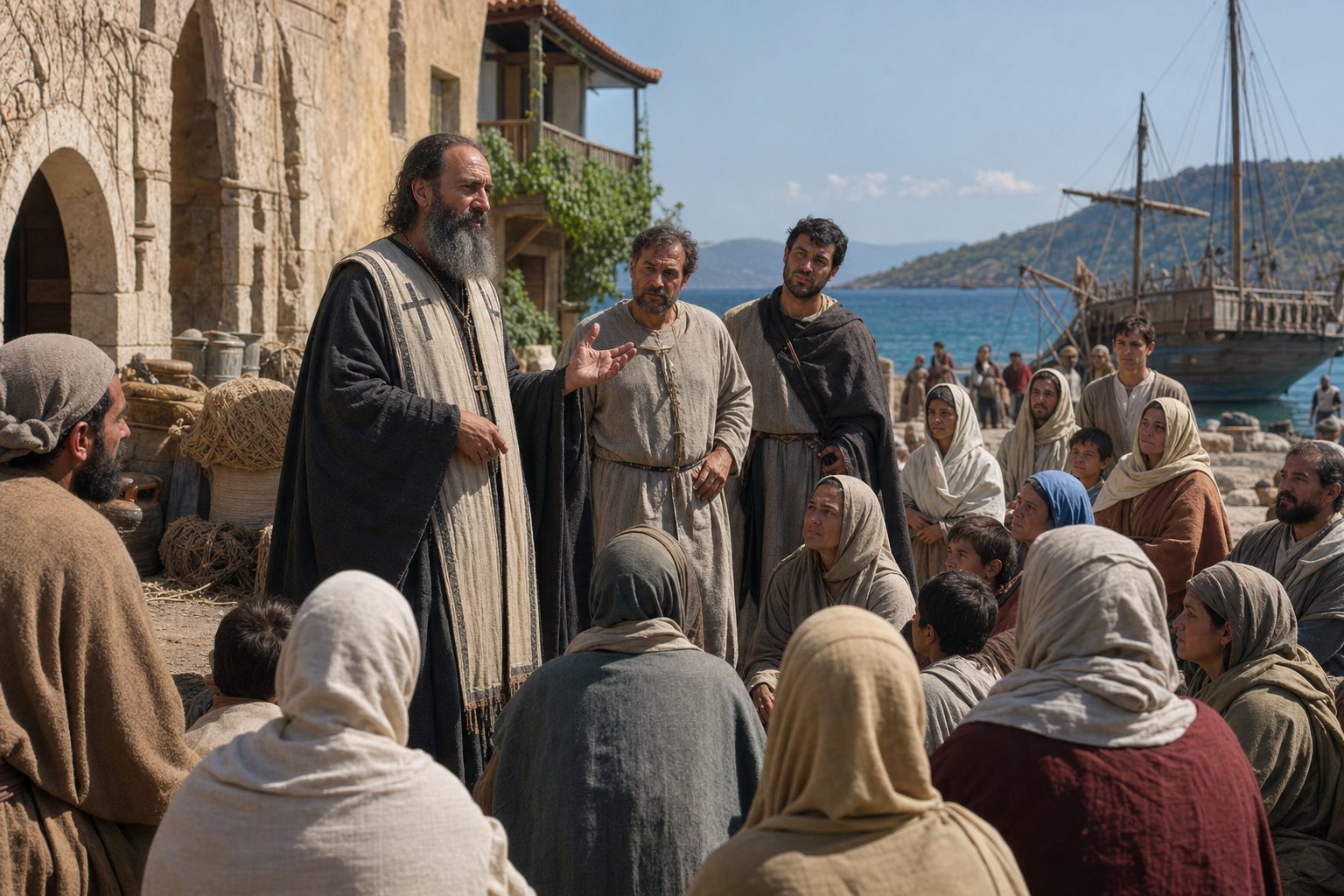
Our holy father John lived in the land of the Goths [under the name of the Goth country is understood here the area then under the control of the Goths on the southern shore of the Crimean peninsula, known as Tavroskifia.
He was born at the request of his parents, as in ancient times the prophet Samuel (1 Kings 1: 9-20), and, from a young age giving himself to pagan exploits, became the home of Christ. He made a journey to Jerusalem and, after visiting all the holy places for three years, returned to his homeland.
The Gothic bishop in 754 signed the definition of the icon-busting council and for this Constantine Kopronim appointed him Metropolitan of Iraq.] , and the Orthodox Gothic Christians strongly began to ask St. John to be their bishop.
At that time it was not infected with iconoclasm, which explains the fact that St. John was escorted for episcopal consecration to this country, where he received the episcopal ordination and after that returned again to his native country.
When there was a disturbance in his country caused by the Khagan [the Khazars had taken Dori, the chief city of the diocese of St. John, with their garrison, and he persuaded the ruler of Gotha to expel Khazar, but Khazarokian Khagan again seized the city, executed many, and gave John into custody, from which, with the help of Gothic Christians, he fled overseas to Amstrid.] , who killed many innocent people with the sword, he barely found an opportunity to escape and arrived in Amstrid.
[The city of Amastris was in the ancient Roman province of Paphlagonia in Asia Minor, on the shores of the Euxine or Black Sea.]
When he heard of the death of the Cagan, he said to those who were with him: "In forty days I will go to judge him before the Christ".
Immediately, according to his prediction, the ship arrived at the dock, and then the most holy bishop of Amstrad, George, laying his body in a coffin, accompanied by candles and candles, accompanied by all the inhabitants of the city, led him to the ship.
The latter was located near Kherson of Crimea, and the monastery where the body of the saint was buried was located at the foot of Mount Audaga. Here, St. John lived and built a large temple in the name of the holy Apostles Peter and Paul, rebuilt in 1425 by the Metropolitan of all Gothia Damian and now non-existent.] and buried here on the site of the burial of monks of the monastery.
On the same day, the memory of the reverend Cornelius Komelsky, the miracle worker of Vologda, who died in 1537 in the Komel Monastery (in 5 versts from Gryzawca), where his holy relics rest.