The memory of the holy martyr Julian Tarsian
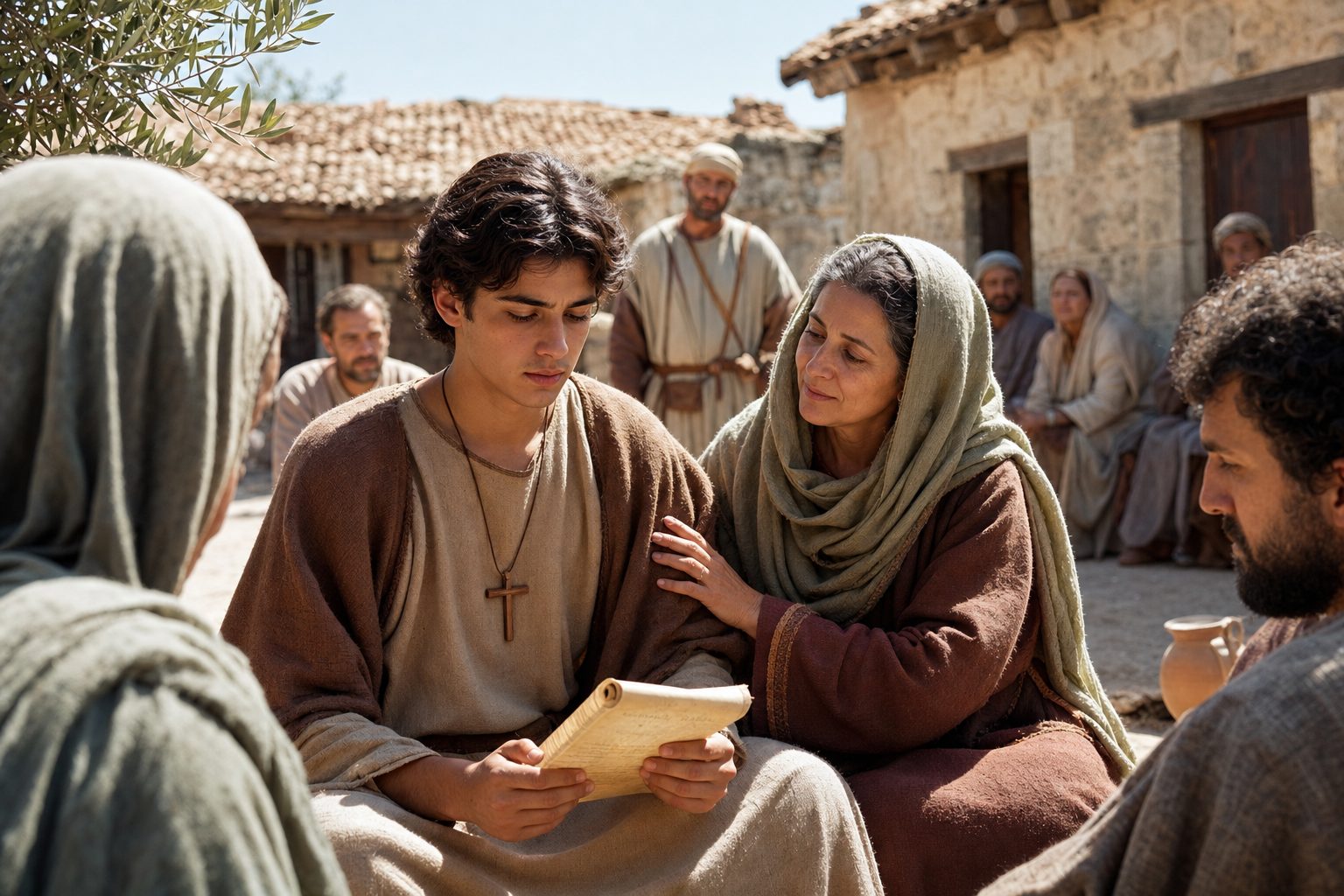
Saint Julian, son of a pagan senator and a Christian mother, was born in the Cilician [Cilicia - a southeastern Roman province in Asia Minor] city of Anazarve.
After the death of her husband, St. Julian's mother moved from Anazarus to the Cilician city of Tarsus.
Here she baptized young Julian into the Christian faith and educated him, teaching him along with the book doctrine the truths of the Christian faith and the rules of piety.
When Julian was 18 years old, the persecution of Christians by Emperor Diocletian [reigned from 284 to 305 C.E.] began, and St. Julian was taken along with other Christians and brought to trial before the egemon Marcian [ruler of the region].
But no amount of cruel torture, threats, or promises of gifts and honors could induce the pious young man to make pagan sacrifices and to renounce Christ.
For a whole year Julian was led through the different cities of Cilicia, wherever he was tortured, but he, like an adamant [Adamant (diamond) - a stone with such strength that it draws other stones, without being harmed.
This title is given in church literature to many saints who were renowned for the firmness of their faith.]
When St. Julian was brought to the city of Aegean [Aegean, a seaside town in Cilicia], the wicked pagans forced the mouth of the holy martyr and put into it the meat and blood of the idolatry, wanting to defile the pure and holy slave of Christ with wicked sacrifices.
When St. Julian was thrown into prison, his pious mother came to see him and accompanied him everywhere, begging the Lord to strengthen her son in his ordeal.
When the torturers took the mother of St. Julian and brought her to court, she asked the hegemon to allow her to visit her son in prison for three days to convince him to worship idols.
She spent days and nights with him in prison, and with motherly affection she talked with him, and with tears she urged him to endure the temporal torment until the end, that he might receive from the Lord eternal blessings in the kingdom of the martyrs.
Thinking that the mother had already persuaded her son to offer sacrifices to idols, the egemon praised her for this admonition, but she began to confess the name of Jesus Christ loudly and fearlessly and to expose pagan godlessness.
And when St. Julian had fearlessly confessed and glorified Jesus Christ, the only true God, and had condemned pagan idolatry, the enraged Igimon ordered the torture of both mother and son.
The mother of the saint, after much torture, cut off the soles of the feet with which she had walked after her son, following him from Tarsus; the martyr Julian was placed in a sack filled with sand and various poisonous snakes, and thrown into the sea.
The body of St. Julian was washed ashore by the waves, where it was found by a pious Alexandrian widow, who gave it an honorable burial.
Later, the relics of Julian were transferred to Antioch [Antioch - the oldest city in Syria, lies at the Orontes river, 10 kilometers from its mouth in the Mediterranean Sea.] .
St. John Chrysostom [St. John Chrysostom - the famous Church Father of the IV and early V centuries; his memory - November 13], when he was the presbyter in Antioch, honored the memory of the holy martyr Julian with a word of praise.
The piety of the invincible warrior, and the truth of the conciliator and the weaponist, let us all praise Julian today, and to him we will cry out: pray Christ God for us all.
Kondack, voice two.
Condac, vow 2: The piety of the invincible warrior, and the truth of the harmonizer and weaponsman, we all praise Julian today, and call to him: pray to Christ God for all of us. ______________________________________________________ 1 Cilicia - a southeastern Roman province in Asia Minor. 2 Tarsus is a large and populated city in the southern part of Cilicia, by the river Kydn, near it, which flows into the Mediterranean Sea.
8 St. John of Zlatoust - the famous Father of the Church of the 4th and early 5th centuries; his memory is on November 13.