The Passion of the Holy Martyr Kyriachia
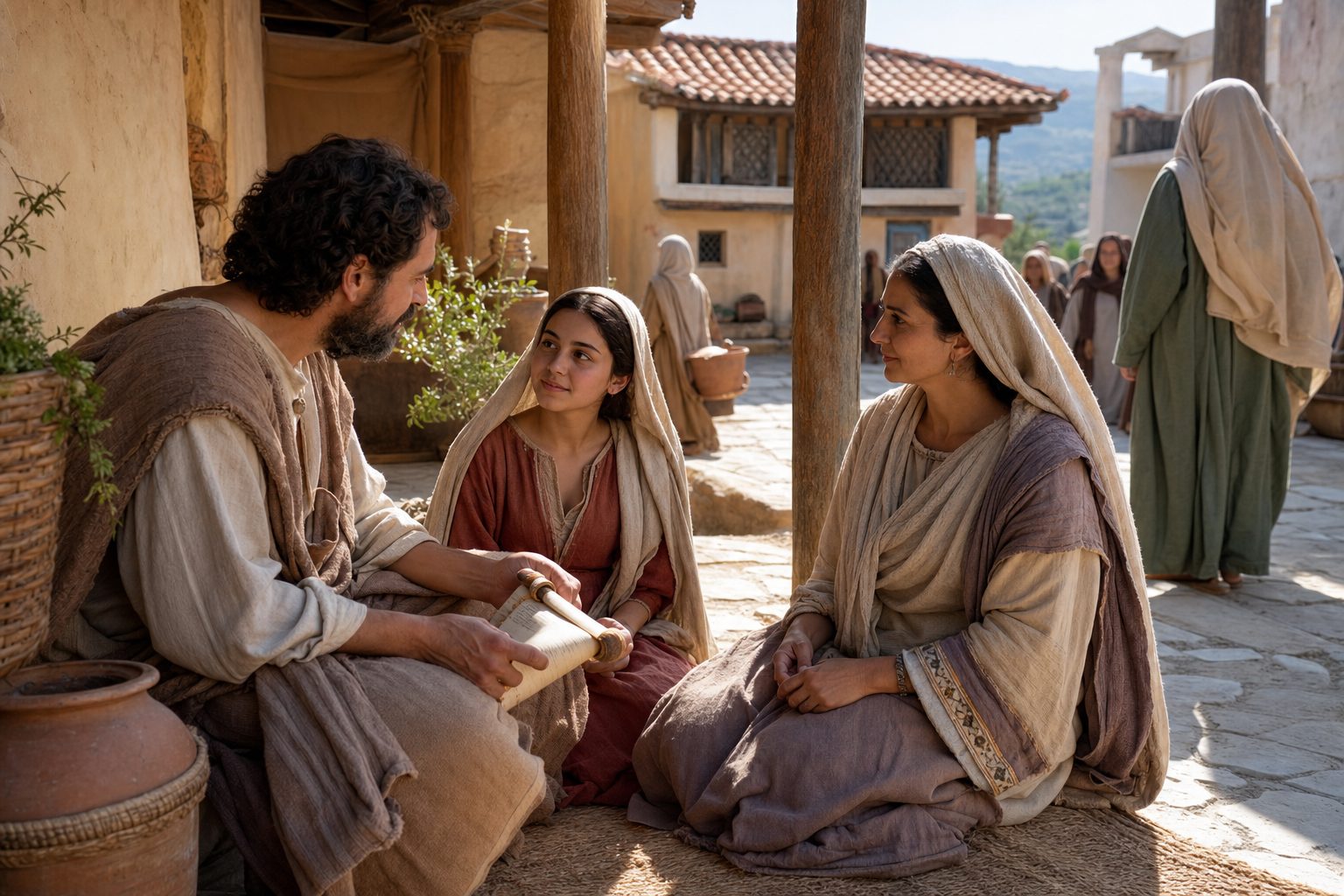
During the reign of Emperor Diocletian, a Christian man named Dorotheus and his wife Eusebius, who were childless, prayed to God for children, promising to dedicate their child to him if they had one.
They prayed for the birth of a daughter on Sunday, and they named her Kyriakia [Kyriachia from the Greek word for Lord, belonging to the Lord] and baptized her with holy baptism.
His co-ruler, Caesar Galerius, persuaded Diocletian to issue a general law against Christians, ordering the destruction of Christian temples, the burning of the books of the Scriptures, and the deprivation of Christians of all civil rights and privileges.
The persecution under Diocletian was marked, first, by the cruelty of the tortures, and second, by the abundance of the number of martyrs, being put to death from 10 to 1000 and more by the plague in one day.] , and the pious parents with their daughter were handed over to the emperor Diocletian, who, having judged them, first ordered them to be beaten for a long time, and then sent Dorotheus and Eusebius to the country of Mytilene [the country of Mytilene is called here the island of Lesbos, located on the
Aegean Sea near the western coast of Mysia in Asia Minor and from the main city later called Mytilene.] to the ruler Justus, and Cyriachia <unk> to Nicomedia [Nicomedia <unk> capital of the eastern Roman Empire, residence of Emperor Diocletian, a magnificent city in the province of Bithynia, on the shore of the Propontid (Marble Sea) in the northeastern part of Asia Minor.] to Caesar Maximian [The time of the death of the holy martyr Kyriakia, some believe, was
303, and according to Filaret (Life of the Saints, July p.
60) she died in 289; but taking into account that the judge of St. Kyriachia was Maximian Galerius and her tortures took place in Nicomedia, it is rather to be thought that she died in 303, at the very beginning of the persecution instituted by Diocletian.] The latter, questioning the saint and seeing that she was firm and unwavering in faith, ordered her to be put to the ground and for a long time without mercy beaten.
During this torture, Kyriakos was praying, and this brought Maximian to a terrible anger, but the holy martyr said to him: "Do not be deceived, Maximian! You will never force me to submit to your will, for God helps me.
After this, Maximian sent St. Kyriachia to the governor of Bithynia7 Hilarion, who, questioning her, ordered her to be brought into the idol temple, but the saint prayed and after her prayer there was a strong earthquake, with all the idols that were in the temple falling to the ground and being scattered into dust, the temple burst into a whirlwind and lifted this dust into the air, and then a fiery lightning flashed and scorched the ruler's face Hilarion, after which he, falling from his seat, died immediately.
And the other prince of the province, who was with him, came and told him, and said, Let the fire burn, and let the fire burn, and let the fire burn in the fire, and let the fire burn in the fire.
And many of the Gentiles that were present believed in our Lord Jesus Christ, and were cast into prison.
And when the soldiers came to execute the sentence upon her, and found her dead, they marveled. Then a voice from heaven said unto them, Go, brethren, and declare the great things of God. And they returned, glorifying God.
On this same day, the representation of the reverend Euphrosyne, in the world of Eudokia, the great princess of Moscow, in 1407.