The memory of our reverend father , Michael Malein
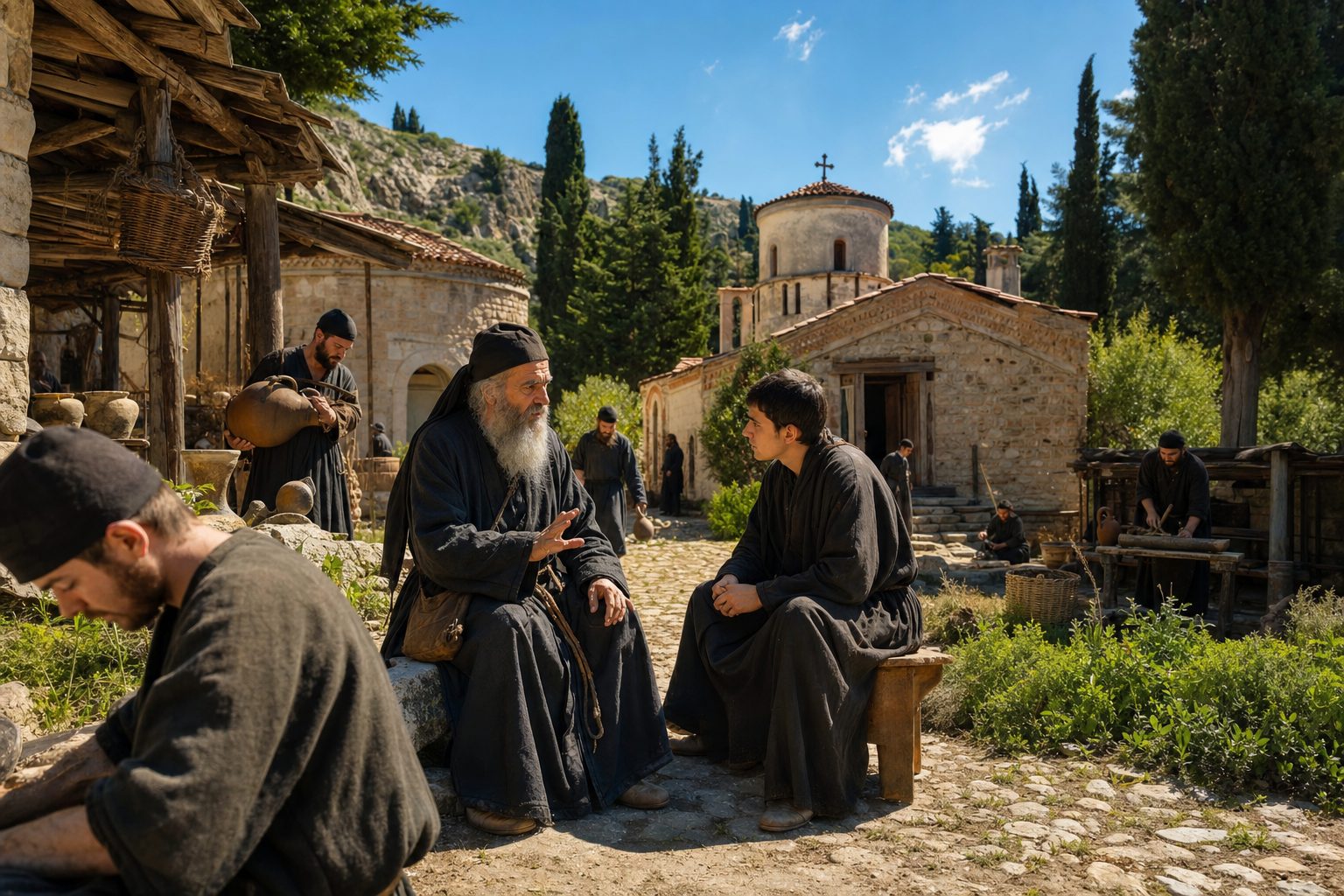
His kinsman, Emperor Leo the Wise (died 912), awarded him the title of candidate and he served in Constantinople; after the death of this emperor, Manuel retired to the Viennese [Viennese - the north-western region of Asia Minor, lying on the shores of the Black Sea, the Bosphorus and the Strait of Constantinople].
This country is known since ancient times and got its name from the Viennese, who moved there from Thrace. Viennese was picturesque, fertile and abundant with cattle. In 546 B.C. the Viennese fell under the rule of the Persians, but in 327 B.C. it became an independent state again; in 75 B.C. the Viennese, by the will of king Nicomedes III, passed to the Romans, as an independent province governed by a special proconsul.
Christianity in Bithynia began in apostolic times (Ap. Pet. 1, p. 1). During the reign of Pliny the Younger, ruler of Bithynia, and Emperor Trajan (98-117), there were many Christians not only in the cities, but also in the villages and hamlets.
In the 4th and 5th centuries Bithynia was particularly remarkable in church terms: there were many church councils here about various heresies.]; at the age of 18, he gave himself under the guidance of the elder John Eladius on Mount Kimina, where he was beheaded with the name of Michael.
In 953 A.D. the monastery was taken over by Avraham, whose name was Athanasius, and who later founded a famous laurel on Athos, where he spent about six years.
His sister was the mother of two famous commanders, Nicéphore and Leo. Nicéphore Phoca became king shortly after the death of the monk (in 963). At the expense of this king, the monk Athanasius created a famous laurel on the Athon.
The icon of St. Michael, which is in the priory of his name, became famous for miracles at the beginning of the XIX century.] . Kondak, глас 2: Flesh's toil was refined by his deeds, mental speed was proved by his enlightenment, Michael, and appeared to be the Trinity's dwelling: to the south is clear bliss, pray incessantly for all of us.
I 'm going to have to ...
Kondack, voice two.
The country is known from the deep antiquity and its name was given to it by the Vifenians who settled in it from Fracia. The city was picturesque, fertile and abundant. In 546 BC, under the rule of the Persian dynasty, until the time of the Viceroy of Rome in 327 BC, under the rule of the Viceroy of Rome, and in the time of the Viceroy of Rome in the 5th century BC, it was a very popular place for the Christian city of Vifenian, especially during the time of the Viceroy of Rome in the 15th century (1758-175 BC).