The memory of the saintly martyr Alexander, bishop of Komansky
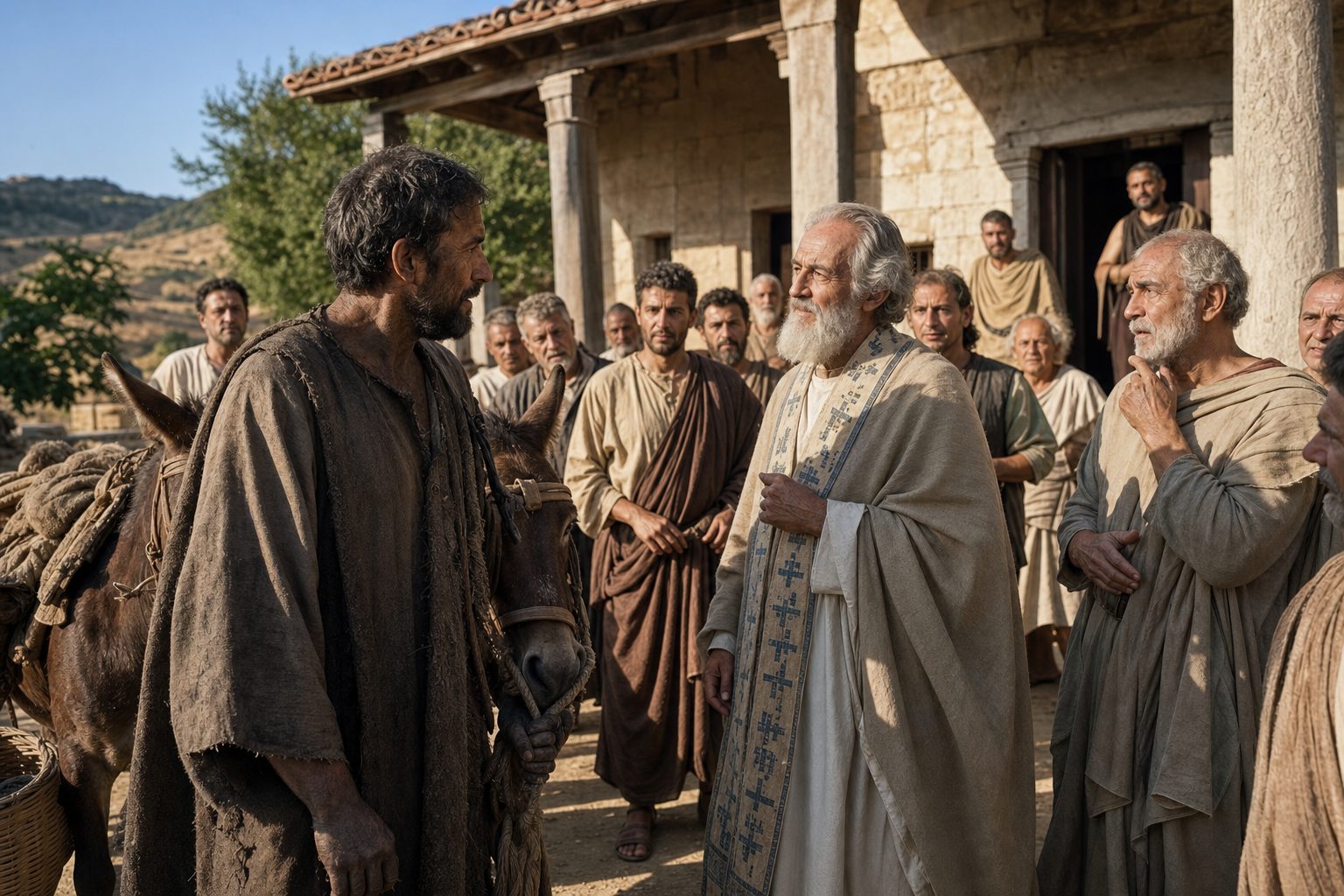
In the city of Comane, near Neocesaria, whose bishop at the time described was St. Gregory the Wonderworker, lived in voluntary poverty a man named Alexander, whose godly life was hidden from human view and known only to God.
St. Alexander, a well-educated man, could have acquired considerable wealth and enjoyed universal respect, but he chose voluntary poverty for God's sake. He despised the world, gave no thought to his knowledge, and made himself out to be an unlettered, ignorant man, fulfilling the apostle's words: "If anyone among you thinks he is wise in this system of things, let him become a fool, that he may become wise". - 1 Cor. 3:18.
He began to make coal and sell it, earning his daily living from it. Because of this, St. Alexander became the object of children's jokes and amusements: from his work his face and clothes were soaked with coal dust, and when he appeared in this form at the market, he looked like an Ethiopian; in the whole city St. Alexander was known as a coal miner.
But the Lord, who dwells in the heights, who watches over the humble and exalts them, was pleased to glorify his humble servant Alexander in this life, and to give him a pillar and ornament for his church; for this he conferred on him the episcopal dignity.
When the council began to elect a man worthy of the holy throne, disagreements arose: some chose persons of noble origin, others <unk> rich, others <unk> eloquent, still others <unk> honourable in appearance and age, and all these chosen men were brought before St. Gregory the Wonderworker as men worthy of praise and episcopate.
St. Gregory the Wonderworker did not hurry, however, with the election and consecration of the bishop, waiting for the Lord Himself to reveal the worthy one. He addressed the council and reminded him how God had chosen David to be the last king over Israel: when Jesse brought his eldest son Eliab to St. Samuel, the prophet asked the Lord if this was not destined to be His anointed.
But the Lord said to Samuel, "Do not look on his appearance or on his height". (1 Kings 16:6-7) St. Gregory said, "We must not judge by appearances, but seek the counsel of God, for man looks on the outward appearance, but God on the heart.
These words of St. Gregory were displeasing to some, and they said with a smile among themselves: if we do not look at the appearance and nobility of origin, then Alexander the coal miner can be elected and appointed bishop.
And he began to ask, Who is this Alexander, of whom ye speak? I would see him. And Alexander stood at that time by the building where the cathedral was, and held the mules that belonged to those who came to the election. And some went out, and brought Alexander into the cathedral. And when he stood up in the midst of the congregation, they all looked at him, and laughed, because both he and his poor skin were black from the coal.
During the general laughter, he stood with reverence before the saint, deeply into himself and not paying attention to those who laughed. St. Gregory the Wonderworker, who had the gift of enlightenment, knew the grace of God that dwelt in blessed Alexander, making him worthy of being elected to the holy throne.
St. Alexander, though he wished to conceal himself, but being unable to tell a lie before such a respected priest and also afraid of the oath, told all about his life: how he, a man of many knowledge, humbled himself so much for God and clothed himself with voluntary poverty.
After this, the saint ordered his relatives to take St. Alexander to him, and there he was washed, dressed properly and brought back to the cathedral. And he himself, sitting down again at his place, was conducting a divinely inspired conversation at this time.
And St. Gregory began to talk with him, and to ask him questions of the Scriptures; and St. Alexander answered so wisely, that they that were present could not but acknowledge him to be a learned and intelligent man, and they were more astonished, saying, Why did a man of such learning hide his wisdom, living among them as the last ignorant?
Then all who were present at the council rejoiced and unanimously elected St. Alexander as bishop, in fulfillment of the words of the Lord, who says in the scripture: "Man looks at the face, but the Lord looks at the heart". (1 Kings 16:7) St. Gregory, elevating St. Alexander in hierarchical ranks, first ordained him in the hierarchy, and then as bishop.
When the saint spoke, the grace of the Holy Spirit flowed from his mouth like a river, bringing the hearts to rest; and the whole city rejoiced and praised God, having such an instructive shepherd.
At the same time, a young philosopher from Attica happened to be in Comana; listening to the teachings of the saint to the people, he laughed at the simplicity of his speech, devoid of oratorical ornaments; but Saint Alexander in his teachings did not care about the beauty of the word, but about its instruction, and for the sake of the simplicity of the listeners his word was simple, being at the same time very soul-saving.
But one day the Attic philosopher had a vision of a flock of very beautiful white doves, which shone brightly, as the psalmist says: "Their wings are covered with silver, and their feathers with pure gold" (Ps. 67:14), and a voice said: "These are the words of Alexander the bishop, whom you have laughed at".
Soon after Diocletian's reign [Emperor 284<unk>305] persecution arose against Christians, and St. Alexander, Bishop of Comen, was seized by the wicked pagans; forced to idolatry, he did not deny Christ, for which, after torture, he was thrown into the fire, where the holy bishop died for Christ our God.