The memory of our revered father Peter
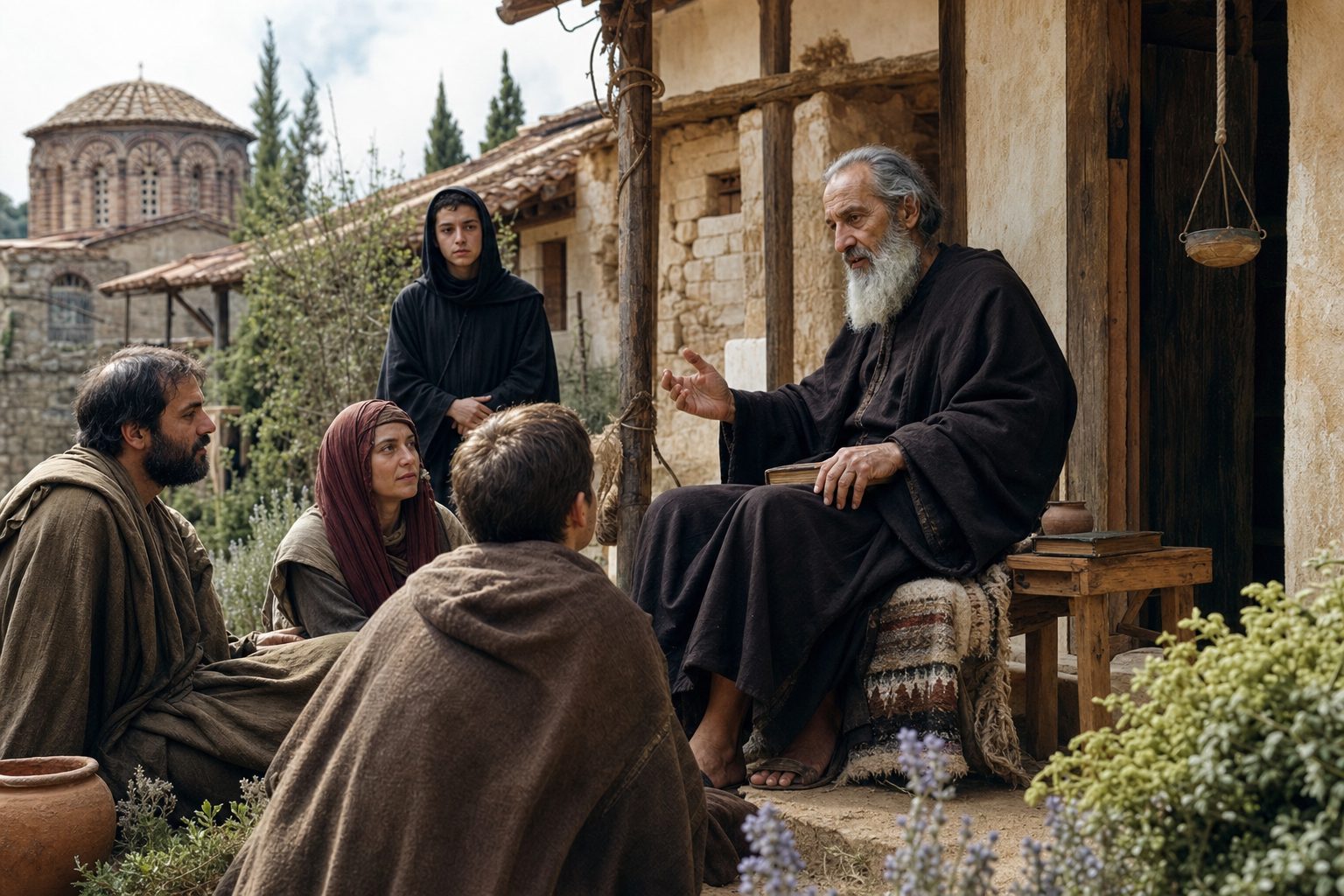
His father, named Constantine, was a patrician. His father was a patrician.
From his youth he was a keen student of science, particularly philosophy, and also studied all secular sciences.
When he reached adulthood, he married and, after his father's death, inherited his honorary patrician rank. He was appointed patrician to the reign of the pious queen Irene and her son Constantine [Constantine VI (VII) Porphyroditus reigned from 780 to 797.
His mother, Irene, reigned from 797 to 802.] When Nicéphore came to the imperial throne [Nicéphore I reigned from 802 to 811] and the Greeks started a war with the Bulgarians, Peter was appointed by the emperor as the chief commander of all the regiments and went with soldiers against the Bulgarians.
During the great war that ensued, the Greeks defeated the Bulgarians, and then, by divine permission, the Bulgarians, recovering from their defeat, brutally defeated the Greeks and killed their emperor Nicéphore himself.
At this time, Peter was captured by the Bulgarians and, with fifty Greek princes, was sentenced to torture and death and kept in prison.
On September 26th and May 8th, he was released from prison and brought to Rome.
From that time Peter devoted himself entirely to the service of God; convinced of the nothingness of all earthly things, he withdrew to the Olympian mountain [the Olympian mountain was in Asia Minor, on the borders of Phrygia and Bithynia].
November.] , thriving in every virtue.
After living there for thirty-four years, Peter arrived in Constantinople after the death of his wife and son, where he first lived for some time at the church he had built, called the Evandrian.
Then he withdrew to a solitary place, where he kept himself in a small cell for eight years.
And so, in virtue and godliness, St. Peter rested upon the Lord, and was joined to the saints who glorify the Father and the Son and the Holy Spirit forever.