The memory of the holy Apostle Judas, brother of the Lord by flesh.
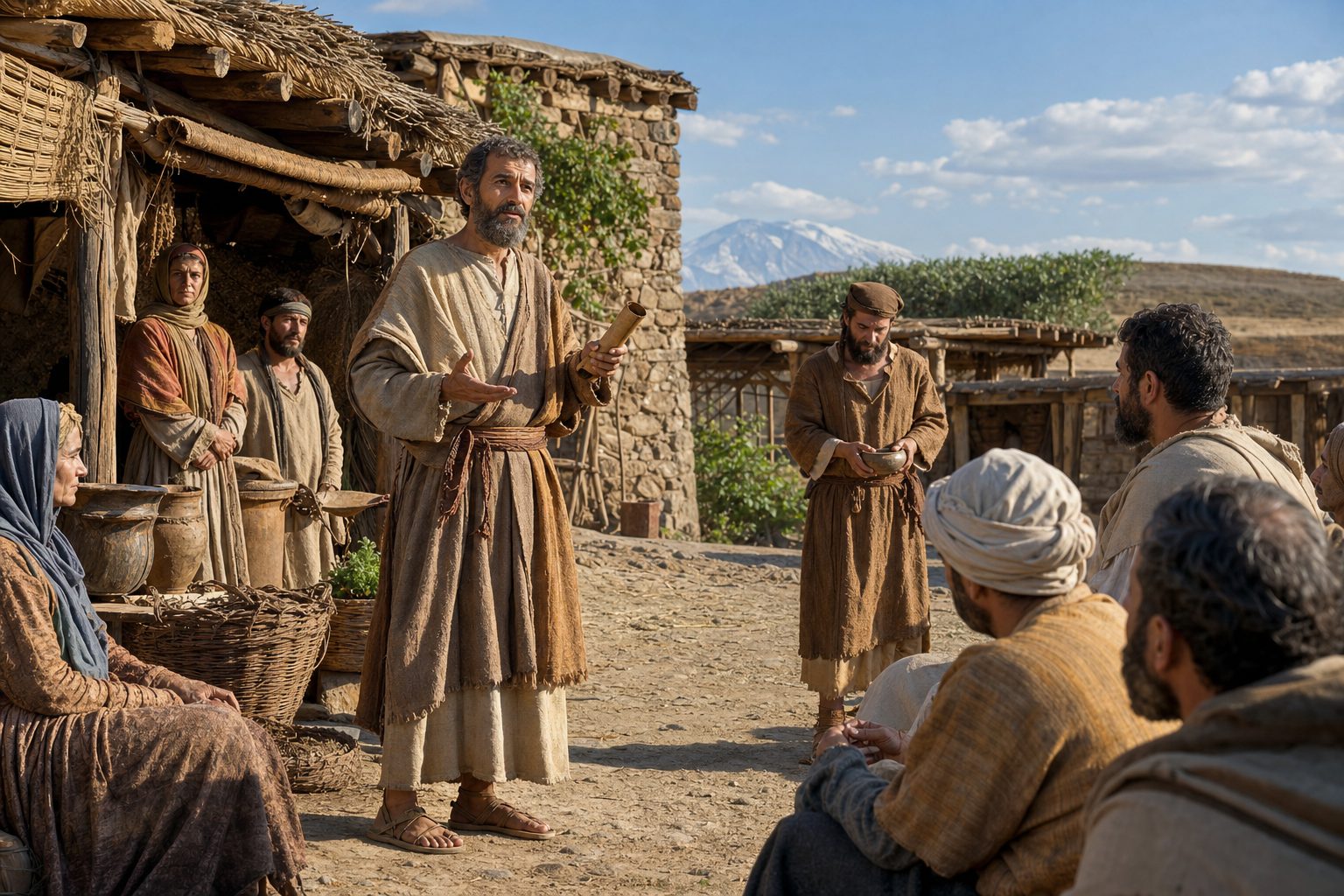
The memory of 19 June St. Jude the Apostle belongs to the twelve disciples of the Lord. He was descended from the tribe of David and Solomon. St. Jude was born in the Galilean city of Nazareth to the righteous Joseph, who was later betrothed to the Virgin Mary.
According to some, it was Salome [From this Salome, we should also distinguish the elderly Salome - a resident of Bethlehem (named the grandmother of the Lord); this Salome was a relative of St. Mary the Virgin and St. Joseph; see about her in the Nativity of Christ, - the month of December, the 25th day, and in the life of St. Joseph.
Joseph the Handmaid, - 26 December] - daughter of Haggai, son of Barachi, brother of St. Zechariah, father of the holy prophet and forerunner of the Lord John.
This Judas was the brother of the holy Apostle James the Righteous, the head of the church in Jerusalem [St. James the Apostle, the Lord's brother in the flesh, was said to have accompanied his father Joseph, the Bridegroom of Mary, and the Infant Jesus, during their flight to Egypt.
After the ascension of the Savior, he was appointed bishop of the church of Jerusalem; he was the first to compose the Divine Liturgy. He died, being overthrown by the Jews from the church wing, in 61 or 62 AD; he has a conciliar letter bearing his name.
The Holy Apostle Jude is usually called Judas Jacobeus, that is, the brother of the Apostle Jacobeus [However, some distinguish from Judas, the brother of the Lord, Judas Jacobeus (mentioned in the Gospel of Luke chapter 6, verse 16 and in the book of Acts chapter 1, verse.
In his last conversation with his disciples, the Lord, after telling them that he was going to God the Father, comforted them by saying: "I will not leave you as orphans.
In a little while the world will behold me no more, but you will behold me; because I live, you will live also. On that day you will know that I am in union with my Father and you are in union with me and I am in union with you.
(John 14:18-21) Then Judas said to the Lord: "Lord, how is it that you are going to make yourself manifest to us and not to the world?"
From this question it is clear that the apostle Jude had not yet abandoned the favored Jewish idea of the Messiah as an earthly king and understood the promised appearance of the Lord in the sense of a visible, sensuous appearance in the glory of an earthly king and conqueror.
The Lord in His answer made it clear to him that He was not an earthly king, and His appearing in His Kingdom was not a visible, outward, bodily manifestation, but an inner, spiritual one - His mysterious communication with believers (John 14:23).]
He accepted this title because of his humility, for he considered himself unworthy to be called a brother of the Lord according to the flesh, especially because he sinned against the Lord, first, by his lack of faith, and second, by his lack of brotherly love.
(John 7:5) In explaining this passage of the Gospel, St. Theophilus [Blessed Theophilus, archbishop of Rome] wrote: "The brothers of Judas did not believe in him".
Achrid in Bulgaria, known for his interpretation of the four Gospels, in which he follows much of St. John the Evangelist, died about 1085.] understands here by brothers of Christ the children of Joseph.
"The brothers of Joseph betrayed him, that is, the Christ, among whom was Judas. Why did they not believe in him? Out of their own evil desire and envy, for the family members are more likely to be envious of their own than of others".
So it is clear that Judas sinned before the Lord by his lack of faith, but not only by his betrayal of Christ, but also by his lack of brotherly love, as is written in the life of James, the brother of God.
When Joseph returned from Egypt, he divided his land between his children, born of his first wife, and he wanted to give a portion to Jesus, born of the Virgin Mary, who was still a child.
But the three sons of Joseph did not want to accept Christ as their share, as born of another mother; only the fourth son - St. James - accepted him as a joint owner of his share and was therefore later called the brother of God.
(Jude 1) The apostle Paul wrote: "Jude, a slave of Jesus Christ and a brother of James, writes to you".
In addition to the name of Judas, the Apostle Judas has other names. The Evangelist Matthew calls him Levi and Thaddeus. These names were given to the Apostle Judas for a reason, namely, the word "Levi" means "son of the heart".
In the case of the Apostle Judas, this name will mean that he - Judas - after committing sins against Christ God in ignorance, when he became convinced that Jesus was the true Messiah - Christ God - he united with Him with all his heart.
The apostle Judas is also called Taddeus, which means "Son of Praise", because he glorified and confessed God's Christ and proclaimed the gospel to many nations.
It is known only that at the end of Domitian's reign [Roman Emperor Domitian reigned from 81 C.E. to 81 C.E.
The two grandchildren of Judah, who were engaged in cultivating the land with their own hands, were brought, at the instigation of the heretics, to this emperor, as descendants of David and relatives of the Lord; but when the emperor saw that they posed no political danger to him, they were released.
The apostle Jude, like the other "brothers of the Lord" in the flesh, endured many evangelistic labors, spreading the Gospel of Christ.
According to the church historian Nicéphore, "the godly Judas, not Iscariot, but another who was called Taddée and Levi, the son of Joseph, the brother of James, who was thrown from the roof of the temple of Jerusalem,
He preached the gospel and spread Christianity first throughout Judea, Galilee, Samaria, Idumea, then Arabia, Syria, and Mesopotamia, and finally came to the city of Edessa, which belonged to King Agarius.
And it was here that the Apostle Judas finished and corrected what had not been finished by that Apostle Thaddeus".
It is said that the holy Apostle Jude preached Christianity in Persia, from where he wrote his epistle in Greek.
The reason for writing this letter was that ungodly men had crept into the congregation, turning God's undeserved kindness into lawlessness and indulging in every kind of loathsome conduct under the guise of Christian freedom.
This brief message contains many profound thoughts and admonitions.
It contains partly dogmatic teachings about the mystery of the Holy Trinity, the incarnation of Jesus Christ, the difference between good and evil angels, and the coming Great Judgment; partly moral teachings about avoiding uncleanness of the flesh, slander, pride, disobedience, envy, hatred, and deceit
The apostle advises everyone to be steadfast in their position, in faith, in prayer, in love, - advises to take care of the conversion of those who have gone astray, to keep themselves from heretics, whose soul-damaging habits he clearly portrays and declares that heretics will perish like the inhabitants of Sodom (Jude 7).
Furthermore, in his letter, the holy apostle Jude says that it is not enough to be converted from paganism to Christianity alone for salvation, but that one must work in faith good works that are Christian and worthy of salvation, and he gives examples of angels and humans punished by God.
(Jude 6) But those who were led out of Egypt died in the desert because they refused to obey God's law.
The apostle Jude, in his letter, reveals to us in brief words the great truths that the holy apostle Judas traveled to many different lands, preaching the gospel, converting the Gentiles to the faith of Christ and instructing them in the way of salvation.
And he went as far as the country of Ararat, and persuaded many of them to become Christians; and the priests of the idolatry took him, and afflicted him, and hanged him on the cross.
Thus ended the heroism and life of the holy Apostle Judas and withdrew to Christ God, to receive from Him the crown of eternal reward in heaven.
Judah was in Mesopotamia at Edessa, where he cured Avgar, and then in the city of Arata on the cross was pierced with an arrow; according to the Slavic prologue, Ap.
Judah arrived in Armenia about 60 years ago and met here with the apostle Vareolomey in Artashat on Araks; he enlightened many, and was crucified in 72 in Ormia in Great Armenia, - now Urmia.
[Judas, leader and martyr, we praise thee, the delight of thy righteousness, and the faith of thy faithfulness: therefore, this day, thy holy memory is celebrated, the remission of sins by thy prayers is acceptable.
Paul, an apostle, who was sent to tell you about God's grace.
You are the pillar and ground of the church of Christ. You preach the word of Christ in tongues, preaching the one God of faith, from whom you received glory, gifts of healing, and healing of diseases.
I 'm going to have to ...
The trapper, voice number one.
To Judas, brother of Christ, leader and martyr, we praise thee, holy martyr, lovely repairer and keeper of faith, for this day thy most holy memory is celebrated, the remission of sins by thy prayers is acceptable.